A Pivotal Year for United Launch Alliance
United Launch Alliance finds itself at a critical juncture. The joint venture between Boeing and Lockheed Martin, long regarded as one of the most reliable launch service providers in the world, is navigating the simultaneous challenges of a leadership transition, the ramp-up of its next-generation Vulcan Centaur rocket, and intensifying competition from SpaceX and a growing roster of newer entrants. How ULA manages these overlapping pressures in 2026 will determine whether the company maintains its position as a premier provider of national security and commercial launch services or cedes further ground to its rivals.
The departure of ULA's chief executive earlier this year caught the industry off guard. While executive transitions are routine in aerospace, the timing was particularly sensitive given that the company was in the midst of qualifying Vulcan Centaur for the most demanding national security missions and working to build the launch cadence needed to fulfill a backlog of contracted flights. The new leadership team, drawn from within ULA's senior ranks, has moved quickly to reassure customers and stakeholders that the company's operational trajectory remains unchanged.
The Vulcan Ramp-Up Challenge
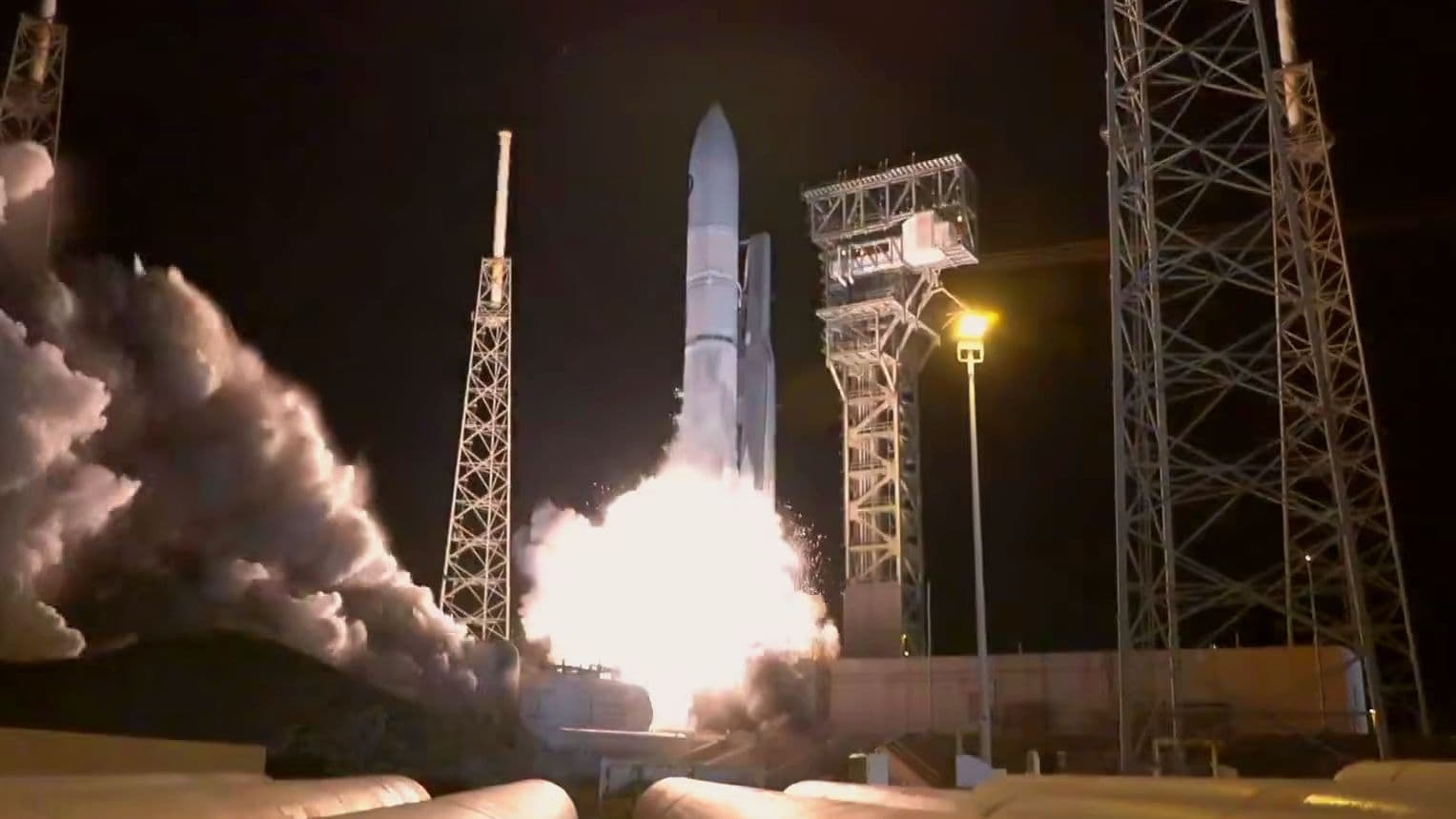
At the center of ULA's near-term future is Vulcan Centaur, the heavy-lift rocket designed to replace both the Atlas V and Delta IV Heavy vehicles that have been the company's workhorses for two decades. Vulcan flew its first mission successfully, delivering payloads to orbit and demonstrating the core performance parameters of the vehicle. But a single successful flight does not constitute operational readiness, and the company needs to demonstrate that it can produce and launch Vulcans at a consistent cadence.
The target for 2026 is ambitious: ULA has publicly stated its goal of completing multiple Vulcan missions this year, ramping from the initial certification flights to a steady operational tempo. Achieving this requires the entire Vulcan supply chain, from Blue Origin's BE-4 engines to Northrop Grumman's solid rocket boosters to ULA's own Centaur upper stage production, to deliver hardware on schedule and in sufficient quantity.
Engine Supply Dynamics
The BE-4 engine, produced by Blue Origin, has been one of the most closely watched elements of the Vulcan program. Each Vulcan first stage requires two BE-4 engines, and ULA needs a steady supply to support its planned launch rate. Blue Origin has invested heavily in scaling up BE-4 production at its facility in Huntsville, Alabama, and recent reports suggest that engine deliveries have been occurring on or close to schedule. However, the production ramp for a new rocket engine is inherently challenging, and any disruption in the supply chain could cascade through ULA's launch manifest.
- Each Vulcan first stage requires two BE-4 engines from Blue Origin
- Northrop Grumman supplies GEM-63XL solid rocket boosters in varying configurations
- The Centaur V upper stage is manufactured at ULA's Decatur, Alabama facility
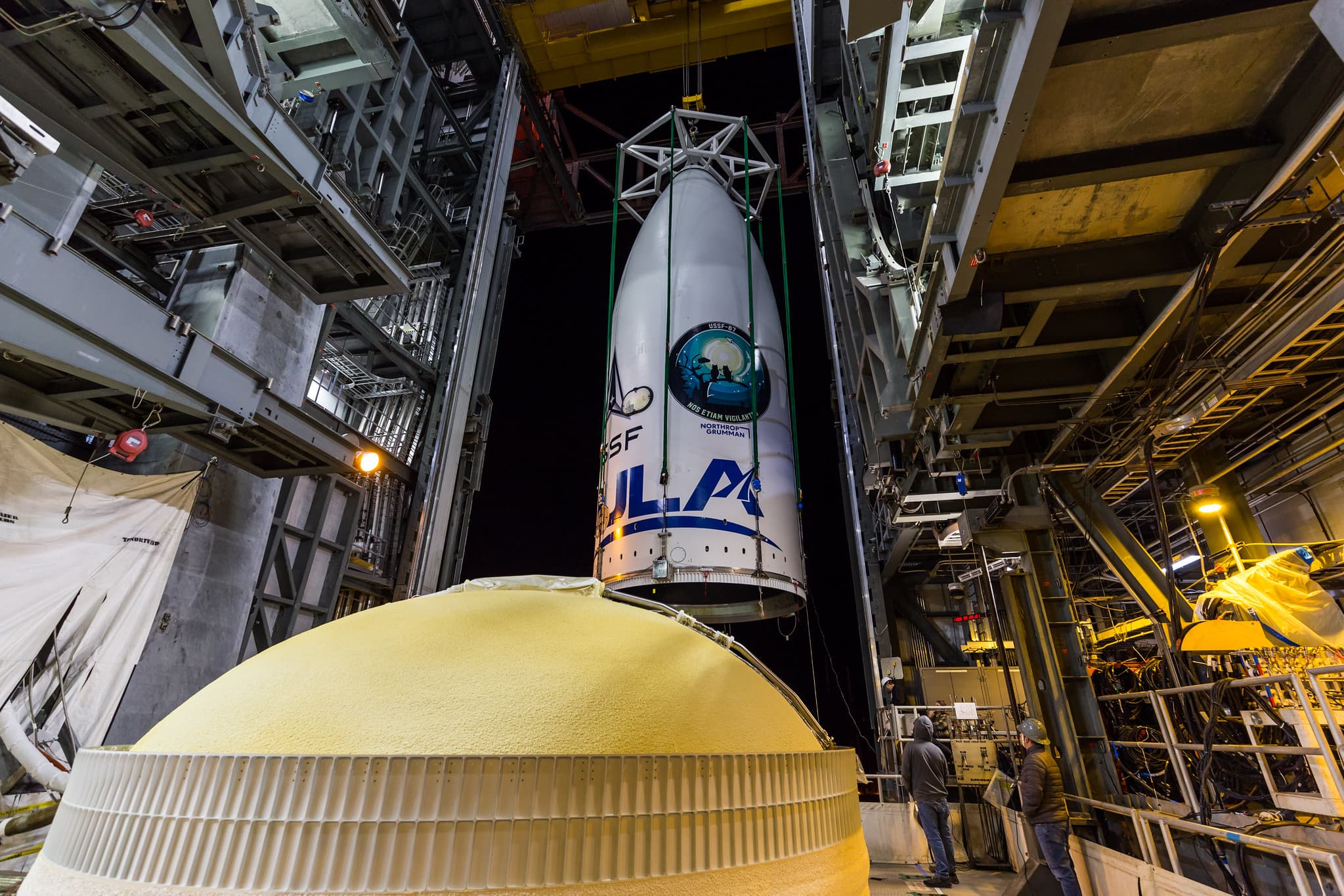
- Payload fairing production must match the diversified manifest requirements
- Launch pad turnaround at Cape Canaveral Space Launch Complex 41 must accelerate
National Security Missions Remain the Core
While ULA has historically served both commercial and government customers, its most strategically important market is national security space launch. Under the National Security Space Launch Phase 2 contract, ULA was awarded sixty percent of the missions for the 2022-2027 period, with SpaceX receiving the remaining forty percent. These missions carry the nation's most sensitive and valuable payloads, including reconnaissance satellites, missile warning systems, and military communications spacecraft.
Delivering these missions on time and without failure is not merely a contractual obligation but a matter of national security. The Space Force and the National Reconnaissance Office have complex mission planning timelines that assume their launch providers will meet committed schedules. Any significant slippage in ULA's manifest could have downstream effects on the deployment of critical national security capabilities.
Certification Milestones
Vulcan Centaur must complete a series of certification flights to be approved for the full range of national security mission profiles, including the most demanding high-energy trajectories to geosynchronous orbit and beyond. Each successful mission adds data points to the vehicle's flight heritage and moves it closer to full certification. The leadership transition has not altered the certification timeline, according to ULA statements, but the process remains one of the company's highest priorities.
The Competitive Landscape
ULA operates in an increasingly competitive launch market. SpaceX's Falcon 9 has established a dominant position in commercial launch services and continues to capture market share in government missions. Falcon Heavy provides a direct alternative to Vulcan for heavy-lift national security payloads. And SpaceX's Starship, while still in development, promises to further disrupt the market with its fully reusable architecture and dramatically lower cost structure.
Beyond SpaceX, ULA faces emerging competition from Blue Origin's New Glenn, which conducted its first orbital flight recently and is positioning itself for both commercial and government missions. Rocket Lab is expanding into medium-lift with its Neutron vehicle. And international competitors including Arianespace's Ariane 6 and potentially India's ISRO are pursuing segments of the market that ULA has traditionally served.
ULA's Differentiators
In this environment, ULA's competitive advantages center on reliability, mission assurance processes, and the deep technical relationships it has built with government customers over more than two decades. The company's heritage of over one hundred fifty consecutive successful missions on Atlas and Delta vehicles is unmatched in the industry, and the engineering culture that produced that track record is a genuine differentiator for risk-averse customers launching irreplaceable payloads.
ULA has also been investing in capabilities that go beyond basic launch services. The company's Vulcan Centaur features an advanced upper stage with extended mission duration and the ability to perform multiple engine restarts, enabling complex multi-payload deployments and high-energy mission profiles. Plans for a reusable engine module, where Vulcan's first stage engines are recovered and reused while the tankage is discarded, could eventually improve the vehicle's cost competitiveness.
Rebuilding Momentum
The new leadership team has identified several priorities for the remainder of 2026. First is executing the planned Vulcan missions on schedule to demonstrate that the vehicle is ready for operational service. Second is deepening engagement with commercial customers who may have been uncertain about ULA's direction during the leadership transition. Third is continuing to invest in Vulcan's capabilities and production infrastructure to support higher launch rates in 2027 and beyond.
Industry observers note that ULA's fundamental technical and operational strengths remain intact. The company has a deep bench of experienced engineers and managers, strong relationships with its government customers, and a next-generation vehicle that has demonstrated its core performance. The leadership transition was disruptive but not destabilizing, and the company appears to be managing the situation with the professionalism that its track record would suggest.
The coming months will be telling. If ULA can execute its planned launches and maintain the mission assurance standards that have defined the company, the leadership change will be remembered as a brief disruption in an otherwise steady trajectory. If the manifest slips or technical issues emerge, the narrative will be harder to control. For now, the company is focused on doing what it does best: putting payloads in orbit, reliably and on time.