A Predawn Military Mission
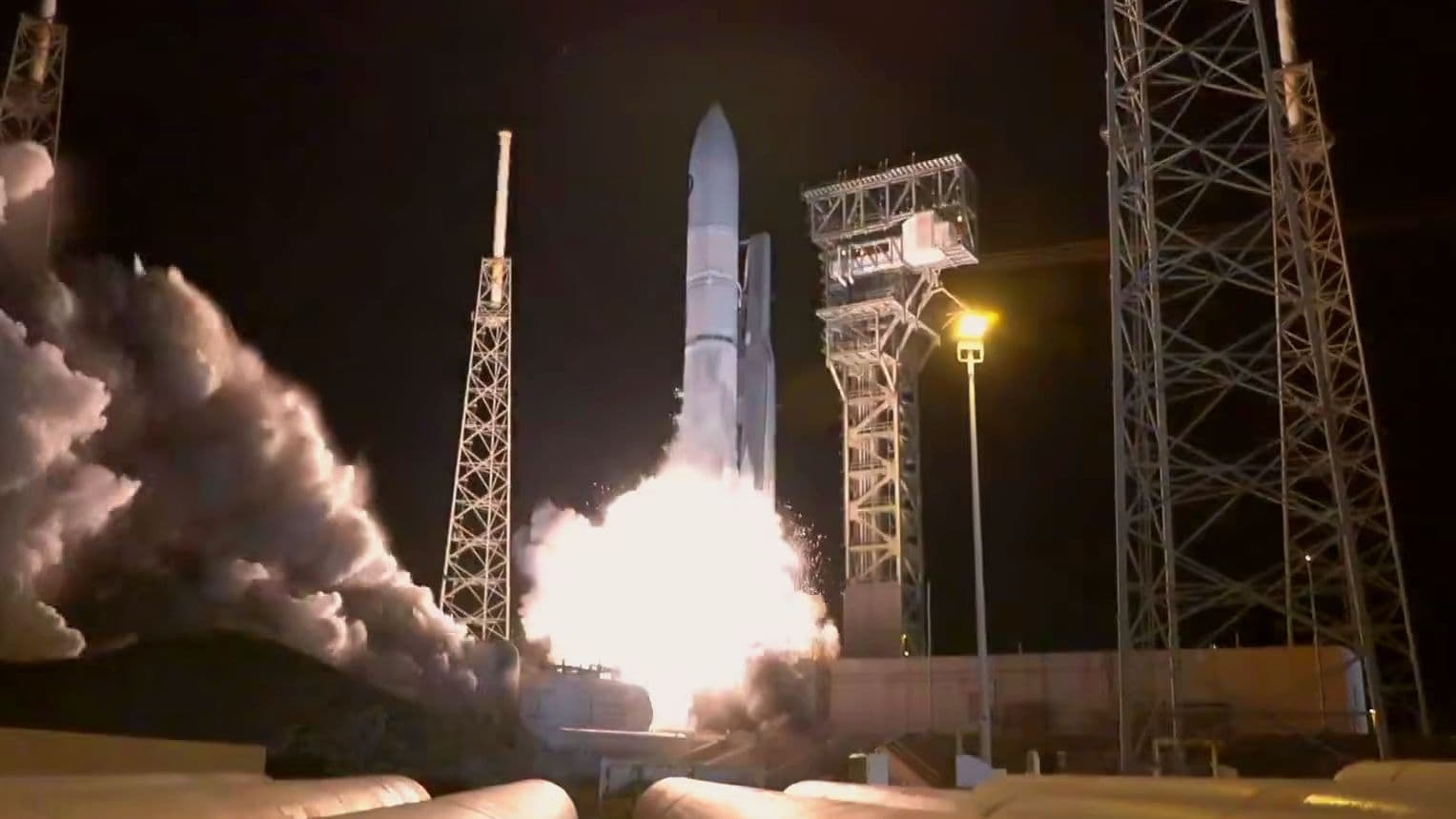
A United Launch Alliance Vulcan Centaur rocket thundered off the pad in the early morning hours of February 12, carrying a pair of space surveillance satellites for the U.S. Space Force on a mission designated USSF-87. Liftoff occurred at 4:22 a.m. Eastern Time, with the rocket's twin solid rocket boosters and BE-4 main engines propelling the classified payload toward orbit. The successful launch marks another operational milestone for the Vulcan Centaur, ULA's next-generation launch vehicle that is gradually replacing the workhorse Atlas V.
The USSF-87 payload has been characterized by military officials as a set of "neighborhood watch" satellites -- spacecraft designed to operate in geosynchronous orbit and provide persistent surveillance of the space domain. While specific technical details remain classified, the satellites are understood to be part of the Space Force's broader effort to maintain awareness of what other nations and commercial operators are doing in the increasingly congested orbital environment.
Why Space Surveillance Matters
The strategic rationale for dedicated space surveillance has grown significantly in recent years. China and Russia have both demonstrated anti-satellite weapons capabilities and have deployed spacecraft that exhibit unusual maneuvering behavior near other nations' assets. The United States has publicly accused both countries of developing systems capable of disrupting, degrading, or destroying satellites -- capabilities that could cripple military communications, GPS navigation, and early warning systems in a conflict scenario.
The "neighborhood watch" metaphor is apt. Just as a terrestrial neighborhood watch program relies on residents keeping an eye on unusual activity, these satellites are designed to detect and track objects operating near high-value American space assets. Geosynchronous orbit, roughly 22,000 miles above Earth, hosts many of the military's most critical communications and missile warning satellites. Having dedicated sensors positioned in that regime provides a level of persistent awareness that ground-based telescopes and radars cannot match.
Vulcan Centaur Builds Its Track Record
For United Launch Alliance, the USSF-87 mission represents continued progress in establishing Vulcan Centaur's operational credibility. The vehicle is powered by Blue Origin's BE-4 engines -- the same powerplant that fuels Blue Origin's own New Glenn rocket -- and is designed to offer greater capability and lower cost than the Atlas V it replaces. Each successful national security mission strengthens ULA's position in the competitive launch market, where it faces pressure from SpaceX's Falcon 9 and the emerging class of medium-lift vehicles from companies like Rocket Lab.
The mission also underscores the military's continued reliance on assured access to space through multiple launch providers. The Space Force has deliberately maintained contracts with both ULA and SpaceX to avoid single-point-of-failure risks in its ability to reach orbit. As the threat environment in space becomes more complex, the cadence of national security launches is expected to increase.
Why It Matters
Space is no longer the sanctuary it once was. The proliferation of anti-satellite weapons, the growing volume of orbital debris, and the increasing dependence of both military and civilian systems on satellite infrastructure have made space domain awareness a national security imperative. The USSF-87 satellites join an expanding constellation of systems designed to ensure that the United States can see, track, and respond to threats in an environment where conflict could unfold at orbital speeds. As the great powers compete for advantage above the atmosphere, missions like this one reflect a military posture that treats space not as a backdrop, but as a contested domain requiring constant vigilance.