Why Solar Panels Won't Cut It Beyond Earth Orbit
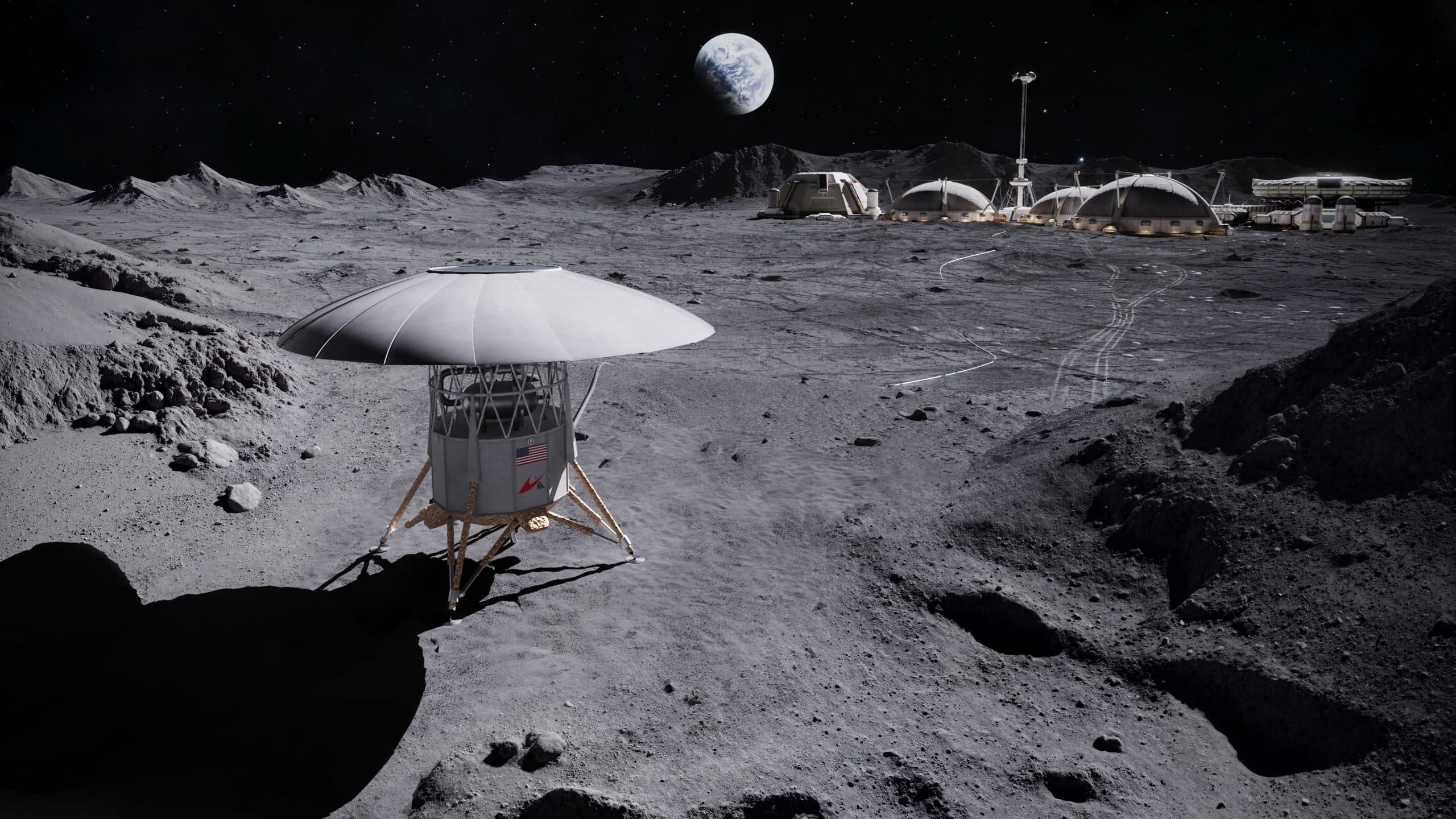
Energy is the invisible prerequisite of every ambitious space mission, and as NASA and commercial partners set their sights on permanent lunar outposts and eventual crewed Mars expeditions, the limitations of existing power systems are becoming impossible to ignore. Solar panels work well in low Earth orbit, but on the lunar surface -- where nights last 14 Earth days -- or on Mars, where dust storms can block sunlight for weeks, photovoltaics alone cannot sustain a human presence. A new strategic analysis argues that nuclear fission reactors represent the only realistic path to energy independence in space, and lays out three distinct approaches for how the United States could get there.
The stakes are not abstract. Researchers have long established that unreliable energy access correlates with poor physical health, poor mental health, and elevated mortality rates on Earth. In space, the equation is starker: lose power, and astronauts die. Current deep-space missions like Voyager 1 and 2 rely on radioisotope power systems that convert the decay heat of plutonium into electricity, but these generators produce only a few hundred watts -- enough for a spacecraft instrument suite, nowhere near sufficient for a crewed habitat, mining operation, or fuel-production facility.
Three Engineering Challenges Without Earthly Shortcuts
Building a nuclear reactor for space is fundamentally different from building one on Earth, and the analysis identifies three constraints that make the engineering uniquely difficult. First, every kilogram launched into space costs thousands of dollars in rocket fuel, meaning space reactors must be dramatically lighter than their terrestrial counterparts. Second, space reactors must operate at significantly higher temperatures to maximize power output per unit mass, which demands materials that can withstand extreme thermal stress for years without degrading. Third, while ground-based reactors are serviced every 18 to 24 months, space reactors must function reliably for approximately a decade with zero maintenance, zero component replacement, and zero margin for the kind of human intervention that keeps Earthbound plants running.
Water cooling, the standard approach in nearly every commercial reactor on Earth, becomes impractical in space. Containing pressurized water safely would require thick, heavy metal pressure vessels that negate the mass savings needed for launch. Instead, space reactor designs typically rely on heat-pipe systems or gas-cooled configurations that can reject waste heat through radiator panels into the vacuum of space -- an elegant solution that introduces its own set of material science challenges.
Three Pathways Forward
The strategic analysis outlines three distinct approaches the US could pursue, each with different risk profiles, timelines, and budget requirements. The first is a large-scale initiative: a 100-to-500-kilowatt reactor project backed by consistent federal leadership and sustained funding, capable of powering a lunar base or Mars habitat. This approach offers the most capability but requires the kind of long-term political commitment that has historically been difficult to maintain across presidential administrations.
The second pathway envisions two smaller projects, each under 100 kilowatts, pursued through public-private partnerships. This model distributes risk between government and commercial partners, encourages innovation through competition, and could produce deployable hardware faster than a single monolithic program. The third option is the most conservative: a modest demonstration reactor under one kilowatt, primarily designed to establish regulatory frameworks, prove out key technologies, and build private-sector confidence before scaling up.
NASA has targeted fiscal year 2030 for deploying a fission reactor on the Moon, and Idaho National Laboratory is serving as the lead facility coordinating research and testing infrastructure across multiple national laboratories. The timeline is ambitious but not implausible -- the Kilopower project, a NASA and Department of Energy collaboration, successfully tested a small fission reactor prototype as recently as 2018.
Why It Matters for the New Space Race
The push for space nuclear power does not exist in a geopolitical vacuum. China has publicly stated its intention to build a nuclear-powered lunar research station, and Russia has decades of experience with space reactor technology dating back to the Soviet-era TOPAZ program. If the US wants to maintain its leadership in deep-space exploration -- and secure the strategic advantages that come with it -- reliable, high-capacity power generation beyond Earth orbit is not optional. It is foundational. The question is no longer whether nuclear reactors will operate in space, but which nation will get there first and establish the infrastructure that shapes the next century of human activity beyond our atmosphere.