A New Wing Shape Takes to the Skies
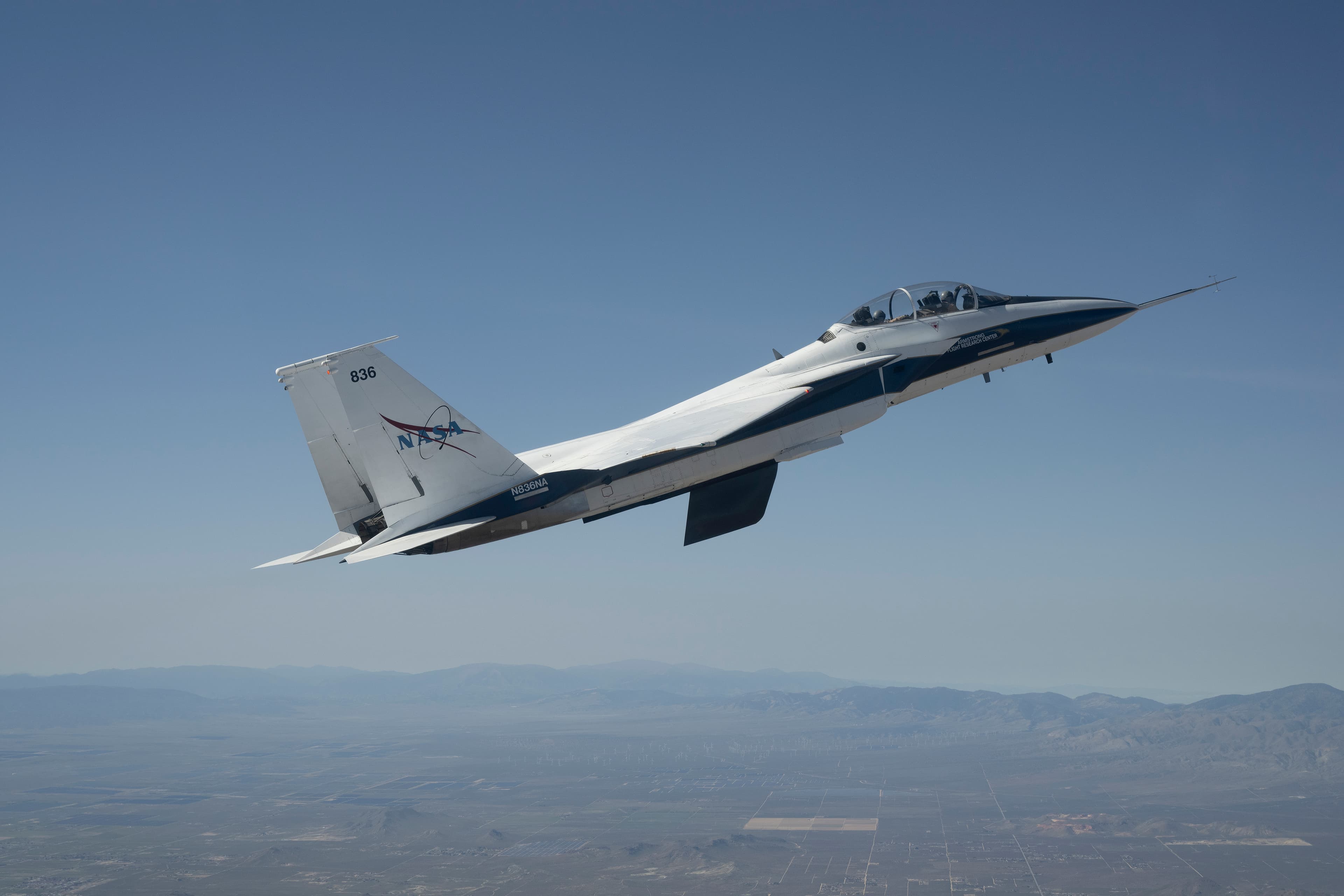
NASA has successfully flown an experimental scale-model wing designed to maintain smoother airflow over swept-back surfaces, a breakthrough that could meaningfully reduce fuel consumption for the next generation of commercial airliners. The first test flight of the Crossflow Attenuated Natural Laminar Flow (CATNLF) wing took place on January 29, 2026, at NASA's Armstrong Flight Research Center in Edwards, California, aboard one of the agency's F-15B research jets.
The 40-inch CATNLF model was mounted vertically beneath the aircraft's fuselage, resembling a ventral fin. During the 75-minute flight, the research team put the jet through a series of maneuvers -- including turns, steady holds, and gentle pitch adjustments -- at altitudes ranging from approximately 20,000 to nearly 34,000 feet. The primary objective was confirming that the aircraft could maneuver safely with the test article attached before moving on to more demanding research flights.
The Science of Smoother Air
The core challenge CATNLF addresses is a phenomenon known as crossflow instability, which occurs when air flowing over swept-back wings -- the kind used on virtually every commercial aircraft and fighter jet -- becomes turbulent. When airflow transitions from smooth (laminar) to turbulent, it generates significantly more drag, which in turn forces engines to work harder and burn more fuel. By reshaping the wing geometry to attenuate the conditions that trigger crossflow turbulence, NASA's design aims to keep air flowing smoothly over a larger portion of the wing surface.
"It was incredible to see CATNLF fly after all of the hard work the team has put into preparing," said Michelle Banchy, the research principal investigator for the project. "Finally seeing that F-15 take off and get CATNLF into the air made all that hard work worth it." Banchy noted that the first flight focused on envelope expansion -- establishing the safe operating parameters of the aircraft with the test article -- before progressing to dedicated research maneuvers in subsequent flights.
A Long Road to the Airlines
This initial sortie is the first of up to 15 flights planned in the CATNLF test series, which will progressively explore the design's performance across a wider range of speeds, altitudes, and flight conditions. Future flights will collect detailed aerodynamic data to validate whether the wing shape achieves the laminar flow improvements that computational models have predicted.
The early results are encouraging. Data gathered during the first flight confirmed that the wing model behaved as expected aerodynamically, with no surprises in its interaction with the host aircraft. If subsequent flights validate the design's drag-reduction potential, the technology could eventually be incorporated into new commercial aircraft wing designs, offering airlines a pathway to lower fuel costs and reduced carbon emissions without requiring fundamental changes to propulsion systems.
Why It Matters
Aviation accounts for roughly 2.5 percent of global carbon dioxide emissions, a figure that is growing as air travel demand increases. Unlike ground transportation, where electrification offers a clear decarbonization pathway, commercial aviation remains stubbornly dependent on jet fuel for the foreseeable future. Aerodynamic improvements like CATNLF represent one of the most practical near-term strategies for reducing aviation's environmental footprint. Even modest drag reductions -- on the order of a few percentage points -- translate into billions of dollars in fuel savings and millions of tons of avoided CO2 emissions across the global fleet.
The path from a scale model on an F-15 to a production airliner wing is long and uncertain. Aircraft manufacturers will need to validate the design at full scale, ensure it can be manufactured affordably, and demonstrate that the laminar flow benefits hold up under the wear and contamination that real-world operations impose on wing surfaces. Insects, ice, and surface roughness from years of service can all disrupt the precise conditions laminar flow demands.
Nevertheless, the successful first flight represents a tangible step forward. NASA's aeronautics research programs have a track record of producing technologies that eventually find their way into commercial aviation -- from winglets to advanced composite structures. If CATNLF follows that trajectory, the wings of airliners flying in the 2030s and beyond could look meaningfully different from those in service today, carrying passengers farther on less fuel.