NATO's Eastern Flank Gets a Major Air Power Upgrade
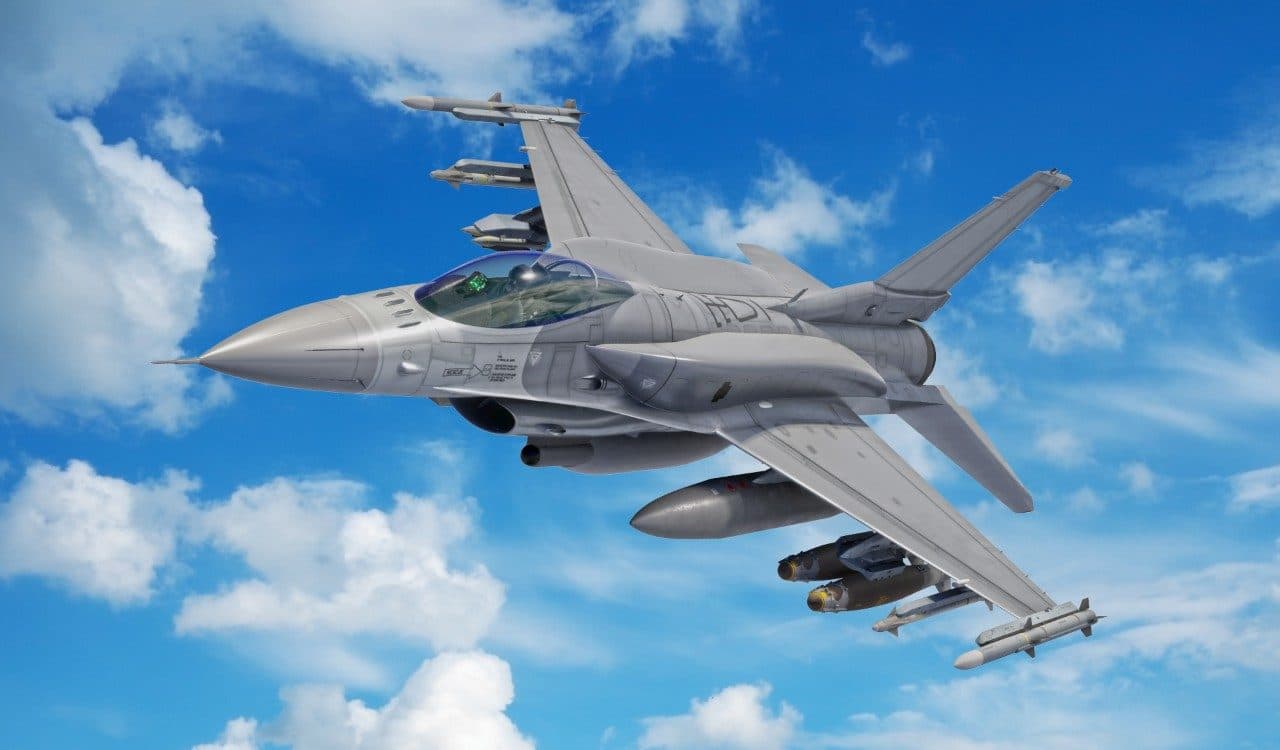
The delivery of the first F-16 Block 70/72 Viper fighters to Bulgaria and Slovakia marks a transformative moment for NATO air power along the alliance's eastern frontier. The advanced fourth-generation fighters, manufactured by Lockheed Martin at its production facility in Greenville, South Carolina, represent the most capable version of the F-16 ever built — and their arrival in southeastern Europe fundamentally alters the air defense calculus in a region that has been underserved by modern combat aviation for decades.
Bulgaria received its first two aircraft at Graf Ignatievo Air Base, while Slovakia took delivery at Sliac Air Base. Both nations had been operating aging Soviet-era MiG-29 fighters that were increasingly difficult and expensive to maintain, with spare parts scarce following the deterioration of relations with Russia. The transition to the F-16 Block 70 brings these NATO allies from Cold War-era technology to a platform that in many respects rivals fifth-generation fighters in sensor capability and network integration.
What Makes Block 70 Different
The F-16 Block 70, also designated the F-16V (for Viper), is not simply an incremental upgrade over earlier F-16 variants. It represents a comprehensive modernization of the airframe, avionics, and weapons systems that gives the aircraft capabilities its original designers never envisioned when the first F-16A flew in 1974.
The centerpiece of the Block 70 is the Northrop Grumman APG-83 Scalable Agile Beam Radar (SABR), an active electronically scanned array (AESA) radar that provides a dramatic improvement in detection range, tracking capacity, and electronic warfare resistance compared to the mechanically scanned radars on earlier F-16 models. The APG-83 can simultaneously track multiple air and ground targets, operate in synthetic aperture mode for high-resolution ground mapping, and function in heavily jammed electromagnetic environments.
Avionics and Cockpit
The cockpit features a new Center Pedestal Display (CPD) that provides a large-format, high-resolution tactical display, replacing the smaller multifunction displays of earlier variants. The avionics suite includes the Link 16 tactical datalink for real-time sharing of situational awareness across the force, an advanced electronic warfare system, and a modernized mission computer with substantially more processing power than its predecessors.
The airframe itself incorporates structural enhancements that extend the service life to 12,000 flight hours — approximately 50 percent more than earlier F-16 models. This means the aircraft delivered to Bulgaria and Slovakia today could remain in service into the 2060s with proper maintenance, providing decades of capability that would otherwise require far more expensive fifth-generation replacements.
Weapons Integration
The Block 70's weapons capabilities are equally impressive. The aircraft can employ the full range of NATO-standard precision-guided munitions, including the AIM-120 AMRAAM advanced medium-range air-to-air missile, the AIM-9X Sidewinder short-range missile, the Joint Direct Attack Munition (JDAM) family of GPS-guided bombs, and the AGM-88 HARM anti-radiation missile. Discussions are ongoing about integrating the AGM-158 JASSM cruise missile, which would give these small air forces a standoff strike capability they have never possessed.
Romania Training Center: Building Expertise at Scale
Alongside the aircraft deliveries, NATO has announced the establishment of a European F-16 Training Center at Fetesti Air Base in Romania. The facility, which will be supported by Lockheed Martin and operated under a multinational framework, is designed to provide pilot training, maintenance instruction, and tactical development for all European F-16 operators.
The training center addresses a critical bottleneck in European air power development. Converting a national air force from Soviet-era aircraft to Western fighters is not simply a matter of delivering new planes — it requires training hundreds of pilots, maintainers, weapons loaders, and support personnel in entirely new procedures, systems, and operational doctrines. The Romanian facility will centralize this expertise, reducing the cost and timeline of conversion for individual nations.
The center will operate a fleet of F-16 Block 20 aircraft transferred from the Royal Netherlands Air Force, which is transitioning to the F-35A Lightning II. These older but capable trainers will allow student pilots to build proficiency on the F-16 platform before transitioning to the more advanced Block 70 at their home bases.
Implications for Ukraine
The establishment of the Romanian training center also has implications for Ukraine, which has been receiving F-16s from European donor nations to bolster its air defenses against Russian aggression. The facility could eventually serve as a training pipeline for Ukrainian pilots and maintainers, providing standardized instruction that would accelerate the integration of Western fighters into Ukraine's military operations.
Strategic Context: Filling NATO's Eastern Gap
The significance of the Block 70 deliveries extends beyond the individual capabilities of Bulgaria and Slovakia. NATO's eastern flank, stretching from the Baltic states through Poland, Romania, Bulgaria, and Turkey, has been the alliance's primary security concern since Russia's invasion of Ukraine in 2022. Air power along this frontier has been unevenly distributed, with Poland and Turkey operating large, modern air forces while Bulgaria, Slovakia, and Romania relied on aging, increasingly unreliable Soviet-era equipment.
The F-16 Block 70 deliveries begin to close this gap. Combined with Poland's planned acquisition of F-35s, Romania's existing fleet of F-16s (upgraded Block 15 models purchased from Portugal), and Greece's modernized F-16 fleet, the southeastern European air defense picture is becoming dramatically more capable.
The interoperability benefits are equally important. All F-16 Block 70 operators share common logistics, training, and communications systems, making it far easier to coordinate multinational air operations than was possible when different nations flew different aircraft types with incompatible systems. In a crisis, Bulgarian and Slovak F-16s could seamlessly integrate with American, Polish, Greek, or Turkish forces under a unified NATO air command.
Analysis: Smart Procurement for Smaller Air Forces
The F-16 Block 70 represents an intelligent choice for nations that need modern air combat capability but cannot afford the cost of fifth-generation fighters. At an estimated unit cost of $60-70 million, the Block 70 delivers approximately 80 percent of the capability of an F-35A at roughly half the acquisition cost and lower operating expenses.
For small air forces like Bulgaria's and Slovakia's, which will operate fleets of 16 and 14 aircraft respectively, the economics matter enormously. The savings on acquisition can be redirected toward weapons procurement, training, and infrastructure — the supporting elements that determine whether an air force can actually fight effectively or merely flies impressive aircraft during peacetime.
The broader lesson is that NATO's air power edge does not rest solely on stealth and fifth-generation technology. A capable, networked force of advanced fourth-generation fighters, operated by well-trained crews with access to NATO's intelligence and command infrastructure, provides a powerful deterrent and a credible warfighting capability. The F-16 Block 70, nearly five decades after the F-16 first took flight, proves that great designs can evolve to meet the challenges of a new era.