From Derry Girls to Donegal Whodunit
Lisa McGee built her reputation crafting one of the most beloved comedies of the past decade with Derry Girls, a show that managed to find hilarity in the backdrop of Northern Ireland's Troubles. Now, with How to Get to Heaven From Belfast, the writer and creator has returned to Netflix with something altogether different in tone yet unmistakably McGee in its DNA. This new series is a dark comedy mystery set across Northern Ireland, the Republic of Ireland, and beyond, following three childhood friends reunited under deeply unsettling circumstances.
The premise begins with a familiar mystery genre setup -- the suspicious death of an enigmatic woman named Greta -- but McGee and director Michael Lennox rapidly subvert expectations. Rather than a grim procedural, the show uses its central crime as a springboard for a layered exploration of female friendship, guilt, memory, and the way small-town secrets have a half-life that far outlasts adolescence. Set in the fictional village of Knockdara in County Donegal (actually filmed in Carnlough, Northern Ireland), the series populates its world with theme-night hotels, single-taxi villages, and cow-related traffic jams that feel authentically lived-in rather than quaint.
A Trio of Performances Worth the Subscription
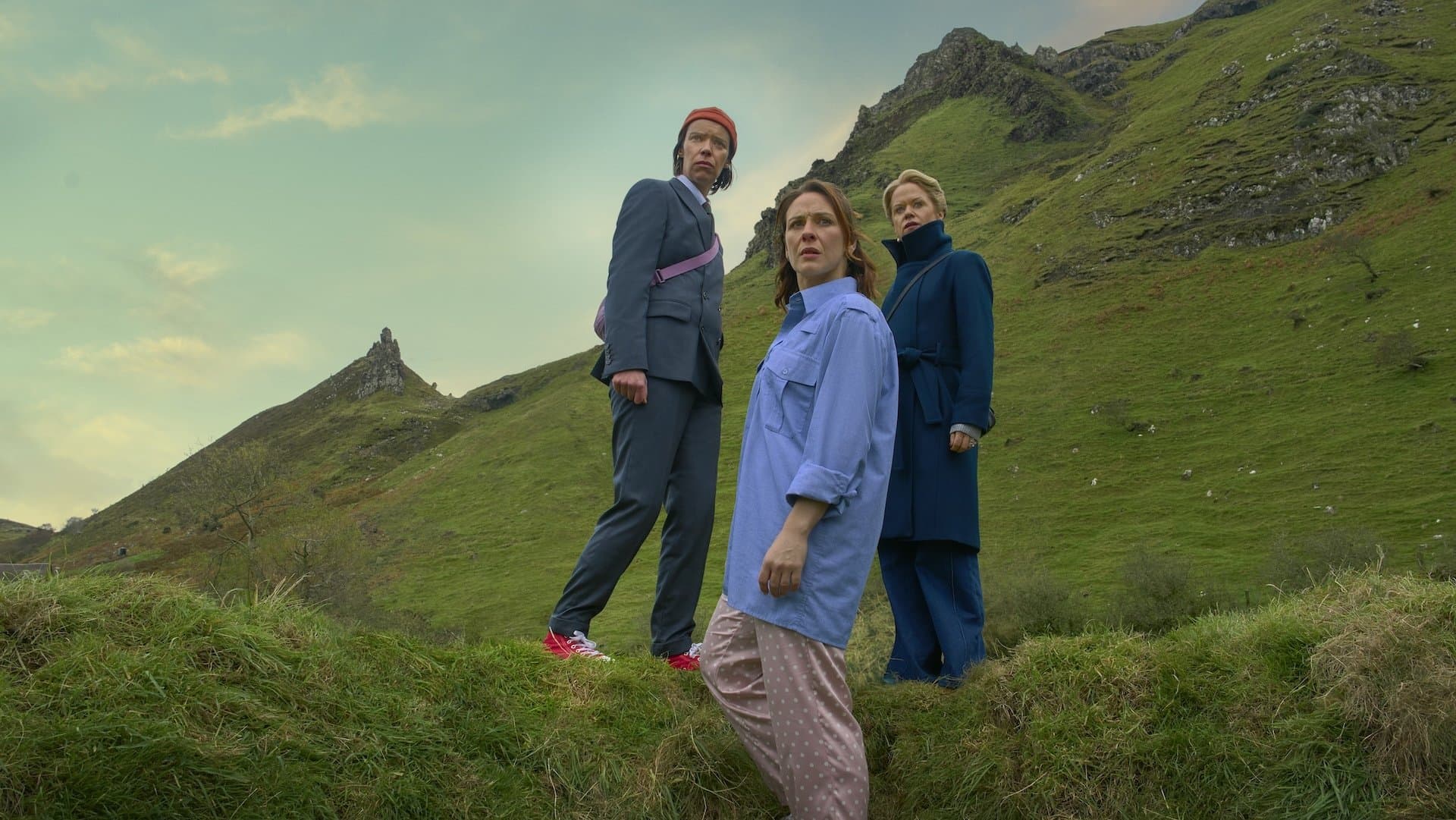
At the heart of the series are three performances that elevate the material from clever genre exercise to something genuinely special. Roisin Gallagher plays Saoirse, a jaded crime-show writer who channels her real-life anxieties into her fictional series Murder Code and finds herself drawn to investigate Greta's death with an intensity her friends find alarming. Sinead Keenan delivers a scene-stealing turn as Robyn, a no-nonsense mother of three whose glamorous exterior barely contains a simmering fury at the hand life has dealt her. And Caoilfhionn Dunne rounds out the trio as Dara, a devout woman caring for her ungrateful mother, whose physical comedy -- the way she peers around a doorframe, the precise timing of her moral outrage -- provides some of the show's biggest laughs.
Together, the three women form an unlikely investigative unit, drawn back to the site of a terrible secret from their youth by mysterious red letters that arrive after Greta's death. McGee writes their dynamic with the specificity that made the Derry Girls ensemble so beloved: the brutal honesty, the fierce loyalty underneath the bickering, and the particular quality of friendships forged in childhood that can survive decades of growing apart.
Genre Subversion With Substance
What distinguishes How to Get to Heaven From Belfast from the crowded field of mystery-comedies is McGee's refusal to let the genre dictate the emotional terms. The show is anchored in the so-called "dead girl" trope, complete with homecoming anxiety, attractive police officers, and investigative journalists poking around, but it systematically undercuts each of these conventions. A nostalgic early-2000s soundtrack, wild production design, and a razor-sharp script ensure that the show's many tonal shifts -- from slapstick to genuine menace -- land with precision rather than whiplash.
The supporting cast adds further depth. Natasha O'Keeffe haunts the series as the deceased Greta, whose synchronized family raises more questions than answers. Bronagh Gallagher delivers a memorable supporting turn, and Leila Farzad provides sharp comic relief as the diva lead actor of Saoirse's TV show. The series weaves between timelines, connecting the friends' present-day investigation with flashbacks to their teenage selves, complete with diaries and matching tattoos.
Why It Matters
How to Get to Heaven From Belfast arrives at a moment when streaming platforms are increasingly reliant on formulaic true-crime content and procedural thrillers. McGee's show is a reminder that the mystery genre can be a vehicle for genuine character work and cultural specificity -- that a whodunit set in rural Ireland, written with deep affection for its characters and setting, can feel more urgent and surprising than any algorithm-driven thriller. For viewers who mourned the end of Derry Girls, this is not a replacement but an evolution: proof that McGee's voice has grown sharper and more ambitious without losing the warmth that made her earlier work resonate worldwide.