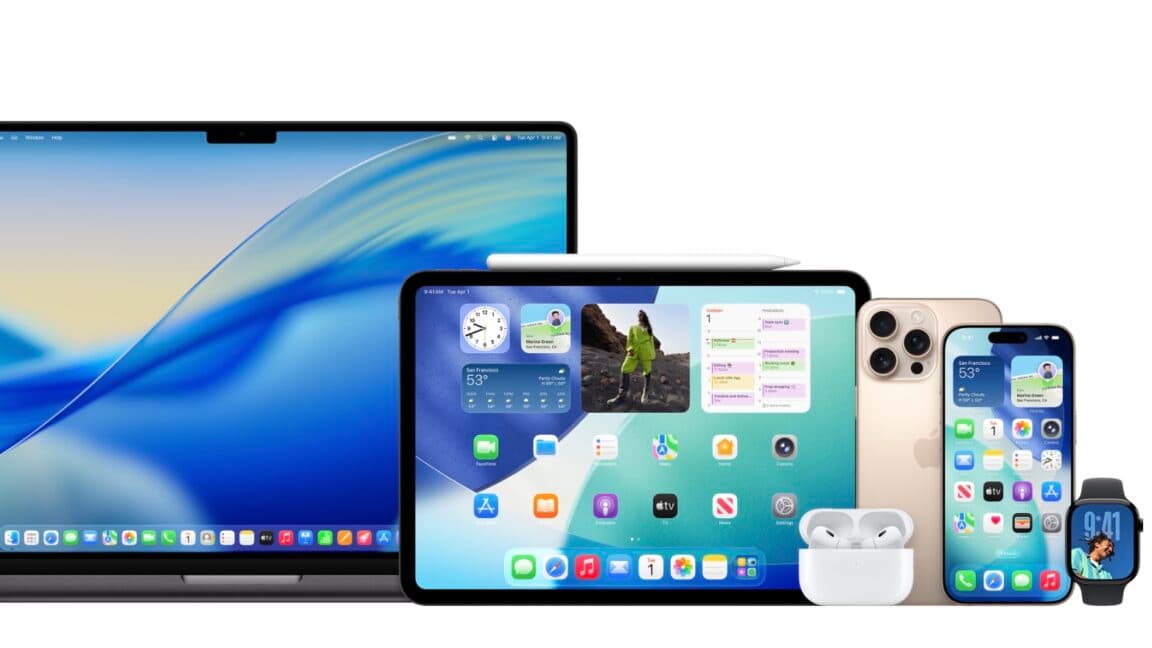
An Update That Benefits the Competition
Apple has released iOS 26.3, iPadOS 26.3, and macOS 26 Tahoe updates to the public, and in a move that would have been unthinkable a few years ago, the most notable new features are designed to make it easier to use non-Apple devices within Apple's ecosystem, or to leave that ecosystem entirely. While the update includes the usual round of bug fixes and security patches, the headline additions are a new "Transfer to Android" migration tool and expanded notification forwarding for third-party wearables.
The result is an iOS release whose most significant user-facing features do not benefit the iPhone at all. Instead, they benefit Samsung Galaxy owners, Pixel users, and anyone wearing a smartwatch that does not bear the Apple logo.
Transfer to Android: A One-Tap Defection Tool
The most striking addition in iOS 26.3 is a fully integrated system for migrating personal data from an iPhone to an Android device. Developed as a joint collaboration between Apple and Google, the tool allows users to place their new Android phone next to their iPhone, establish an automatic wireless connection, and transfer photos, messages, notes, contacts, and even compatible apps to the new device.
Whether third-party apps can participate in the transfer depends on whether their developers have adopted AppMigrationKit, a framework Apple introduced in iOS 26.1 specifically for this purpose. Apple notes that AppMigrationKit functions exclusively for transfers from Apple devices to non-Apple devices, not the other direction, meaning the tool is architected to help people leave, not to lure them in.
The DMA Connection
The transfer tool did not materialize out of Apple's goodwill. It is a direct response to the European Union's Digital Markets Act (DMA), which requires designated gatekeepers, Apple among them, to ensure that users can switch between platforms without losing their data. While the regulatory mandate originated in Europe, Apple has chosen to deploy the feature globally rather than maintain separate regional builds of iOS, a pragmatic decision that nonetheless extends the DMA's consumer-protection philosophy to users worldwide.
Notification Forwarding Opens the Wearable Gates
The second major interoperability addition is notification forwarding for third-party wearables. Under a new interface in Settings, users can designate a non-Apple smartwatch or fitness tracker to receive forwarded iPhone notifications, complete with the originating app's name and full notification content. Users can configure which apps forward notifications on a per-app basis, giving them granular control.
There is, however, a meaningful limitation: notifications can only be forwarded to one connected device at a time, and enabling forwarding to a third-party wearable disables notification delivery to an Apple Watch. The restriction means users must choose between ecosystems rather than straddling both, a constraint that critics argue falls short of the DMA's interoperability spirit.
The feature is built on a new AccessoryNotifications framework that Apple has not yet fully documented on its developer portal. For now, notification forwarding is limited to users in the European Union, though the underlying technical infrastructure is present in the global iOS build and could be activated in additional markets if regulators elsewhere adopt similar requirements.
AirPods-Style Pairing for Third-Party Accessories
Rounding out the interoperability package, iOS 26.3 also introduces proximity-based pairing for third-party Bluetooth accessories in the EU, mirroring the seamless setup experience that AirPods currently enjoy. The feature allows compatible headphones, speakers, and other accessories to trigger an on-screen pairing card when brought near an iPhone, eliminating the need to dig through Bluetooth settings manually.
A Regulatory Reality Check
Taken together, the iOS 26.3 interoperability features represent a concession, not a strategy. Apple has long argued that its walled-garden approach protects user privacy and security, and nothing in this update suggests the company has changed its mind. What has changed is the legal landscape: the DMA gives the European Commission enforcement teeth, and Apple is complying methodically if not enthusiastically.
For users, the practical takeaway is simple. Switching away from an iPhone just got meaningfully easier, and third-party accessories just got meaningfully more useful. Whether many users actually take Apple up on the offer remains to be seen, but for the first time, the door is genuinely open.