Breaking a Decades-Long Trend
For nearly a quarter century, the trajectory of drug overdose deaths in the United States moved in only one direction: up. Year after year, the toll climbed as successive waves of opioids, from prescription painkillers to heroin to synthetic fentanyl, swept through communities nationwide. But over the past two years, something unexpected has happened. Overdose death rates have begun falling, and falling sharply. While there is no single explanation for this reversal, researchers and frontline harm reduction workers point to a convergence of factors, chief among them a significant behavioral shift in how fentanyl users consume the drug.
Increasingly, people who use fentanyl are choosing to smoke it rather than inject it. That seemingly simple change in the method of administration carries profound public health implications, because smoking fentanyl, while still dangerous and potentially lethal, delivers the drug to the brain more gradually than intravenous injection. The slower onset gives users a marginally wider window to recognize and respond to an overdose, and it reduces the risk of the sudden respiratory depression that makes injected fentanyl so deadly.
What Is Driving the Behavioral Change
The shift from injection to smoking is not the result of any single public health campaign. Instead, it appears to be driven by a combination of supply-side changes and grassroots harm reduction efforts. On the supply side, the purity of street fentanyl has declined markedly in recent months. Lower-potency product makes injection less efficient and makes smoking a more practical alternative, since users can titrate their dose more easily by controlling how much they inhale.
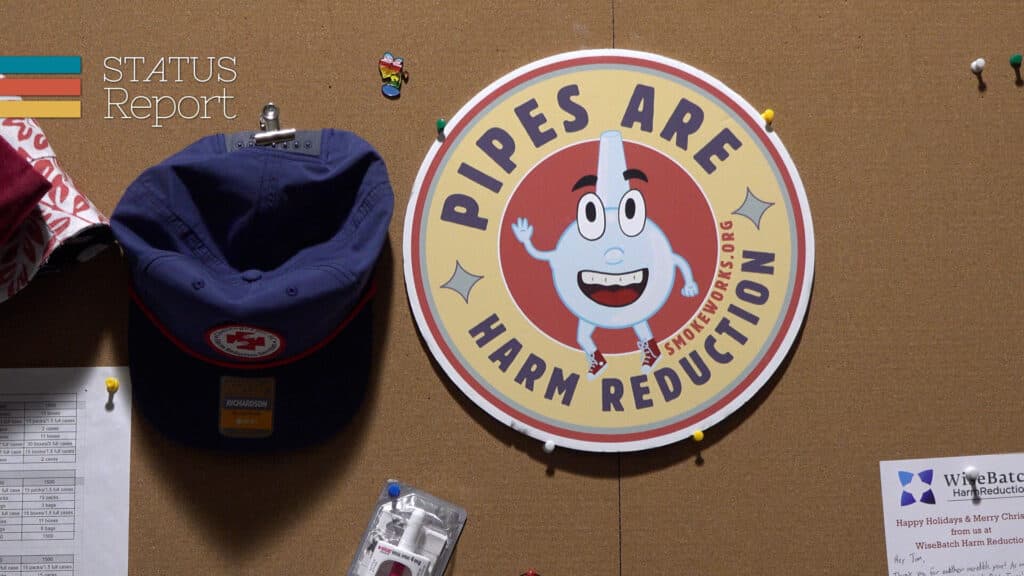
On the ground, harm reduction organizations have played a critical role by making smoking supplies more readily available. Jim Duffy of Smoke Works Injection Alternatives, a harm reduction initiative, explained that for years, "people were using syringes because that's all that was offered" at distribution sites. When his organization began providing glass pipes and aluminum foil alongside traditional syringe exchange supplies, the response was immediate. Users began "putting syringes back" and choosing pipes instead, suggesting that demand for safer consumption methods had existed long before the supplies were available.
What Frontline Workers Are Seeing
Megan Merrill, an outreach worker who serves unhoused communities, has witnessed the transition firsthand. "They're definitely smoking their drugs more than they're injecting it," she observed, attributing the change partly to practical physical limitations. Many long-term injection drug users have severely damaged veins, making intravenous use increasingly difficult and painful. Smoking offers a less invasive alternative that does not require finding a viable injection site.
The harm reduction model underlying these efforts is not without controversy. Critics argue that distributing drug paraphernalia enables continued substance use. Advocates counter that the evidence overwhelmingly supports harm reduction as a bridge strategy that keeps people alive long enough to access treatment when they are ready. The declining overdose statistics, they argue, are the strongest possible validation of this approach.
The Bigger Picture
It is important to note that smoking fentanyl is not safe. It remains a powerful synthetic opioid that can kill in small doses regardless of the route of administration. The decline in overdose deaths is also attributable to other factors, including wider distribution of the overdose-reversing medication naloxone, expanded access to medication-assisted treatment programs, and the aforementioned decrease in fentanyl purity in the illicit supply chain. No single intervention deserves full credit for a trend that reflects years of overlapping public health efforts.
Still, the behavioral shift from injection to smoking represents a meaningful and somewhat underappreciated variable in the equation. For policymakers weighing how to allocate limited public health resources, the data suggests that meeting people where they are, literally and figuratively, by providing safer consumption tools and low-barrier outreach can yield measurable results. After two decades of relentlessly worsening outcomes, the current trajectory offers cautious reason for hope, even as the underlying crisis of addiction and substance use disorder remains far from resolved.