Coal Gets a Presidential Lifeline
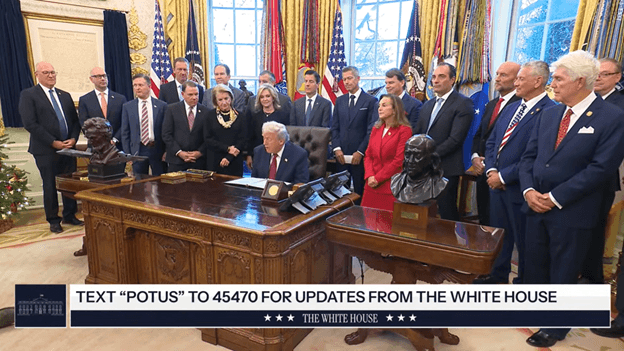
President Trump has signed an executive order directing the U.S. military to establish purchasing agreements with coal-fired power plants, marking his administration's most aggressive intervention yet in an effort to reverse the fuel's long decline. The order was announced on the same day Trump received a trophy from the Washington Coal Club naming him the "Undisputed Champion of Clean, Beautiful Coal" -- a title that belies coal's standing as the most polluting source of electricity on the American grid.
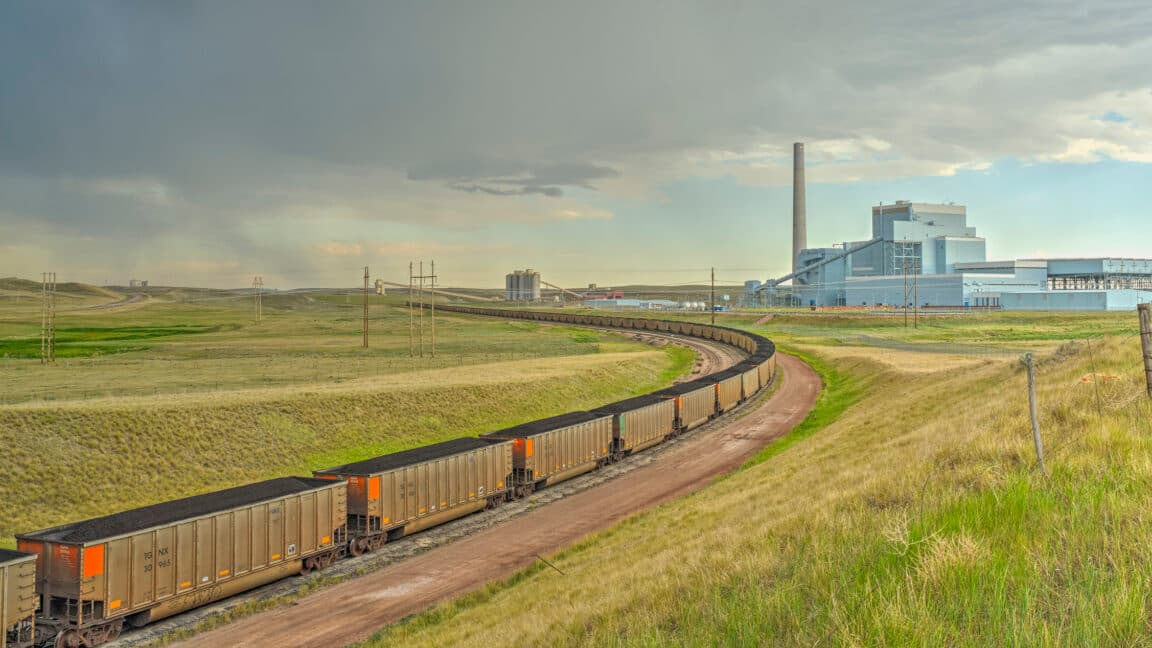
The directive attempts to use national defense as the rationale for what amounts to a government subsidy for an economically uncompetitive fuel. Coal is currently the second most expensive source of power for the U.S. grid, outpriced by natural gas, wind, solar, and hydroelectric generation. Only nuclear energy carries higher generation costs. Before Trump's return to office, the grid had been moving rapidly away from coal, a trend that continued even during his first term.
Government Intervention in a 'Free Market'
The executive order represents a striking departure from the Republican Party's traditional advocacy for free-market economics. Rather than allowing market forces to determine the energy mix, the administration has determined that direct government purchasing is the mechanism needed to keep coal plants viable. This follows earlier attempts to keep coal alive through an energy emergency declaration, which the administration used to force plants that were scheduled for closure to continue operating.
That approach relied on what legal scholars have described as a strained interpretation of the Federal Power Act, and it has already drawn a lawsuit. The new military purchasing strategy appears designed to create an alternative pathway that sidesteps some of those legal vulnerabilities by routing coal support through the Department of Defense budget rather than energy regulatory authority.
Environmental and Health Costs
The policy carries significant environmental and public health implications. Coal combustion produces more carbon dioxide per unit of energy than any other source, making it the single largest contributor to climate change in the power sector. Beyond greenhouse gases, coal plants emit particulate matter that damages lungs, sulfur dioxide and nitrogen oxides that contribute to acid rain, and coal ash containing toxic metals including arsenic, mercury, and lead. Communities near coal plants -- often lower-income and disproportionately minority populations -- bear the heaviest burden of these emissions.
Directing the military to purchase coal power also raises questions about readiness and cost efficiency. The Department of Defense has been investing in renewable energy and energy resilience programs precisely because diversified, distributed energy sources are considered more secure against disruption than centralized fossil fuel plants dependent on fuel supply chains.
Why It Matters
The executive order signals that the administration is willing to use federal purchasing power to override market economics in the energy sector. If implemented at scale, it could slow the transition away from coal in regions where military installations are concentrated, while adding costs to the defense budget. For the broader energy industry, the move creates policy uncertainty at a time when utilities and investors are making multi-billion-dollar decisions about the next generation of grid infrastructure. Whether the order survives legal challenges and achieves meaningful coal purchases remains to be seen, but its intent is unmistakable: keep coal burning, regardless of the price.
Energy analysts note that the directive also sends a chilling signal to investors who have been committing capital to wind, solar, and battery storage projects near military installations. If government purchasing is redirected toward coal, the business case for renewables in those regions weakens, potentially stranding investments and slowing deployment of cleaner alternatives. The long-term economic trajectory still favors renewables -- their costs continue to decline while coal's remain stubbornly high -- but policy interventions of this nature introduce volatility that project developers and lenders find difficult to price in.
For the coal industry itself, the order may offer only a temporary reprieve. Even with military contracts, the structural forces driving coal's decline -- cheaper alternatives, tightening emissions standards in most states, and aging plant infrastructure that requires expensive maintenance -- are unlikely to reverse. The question is whether federal purchasing power can slow the inevitable long enough to matter politically, even if it cannot alter the underlying economics.