Where No Network Reaches
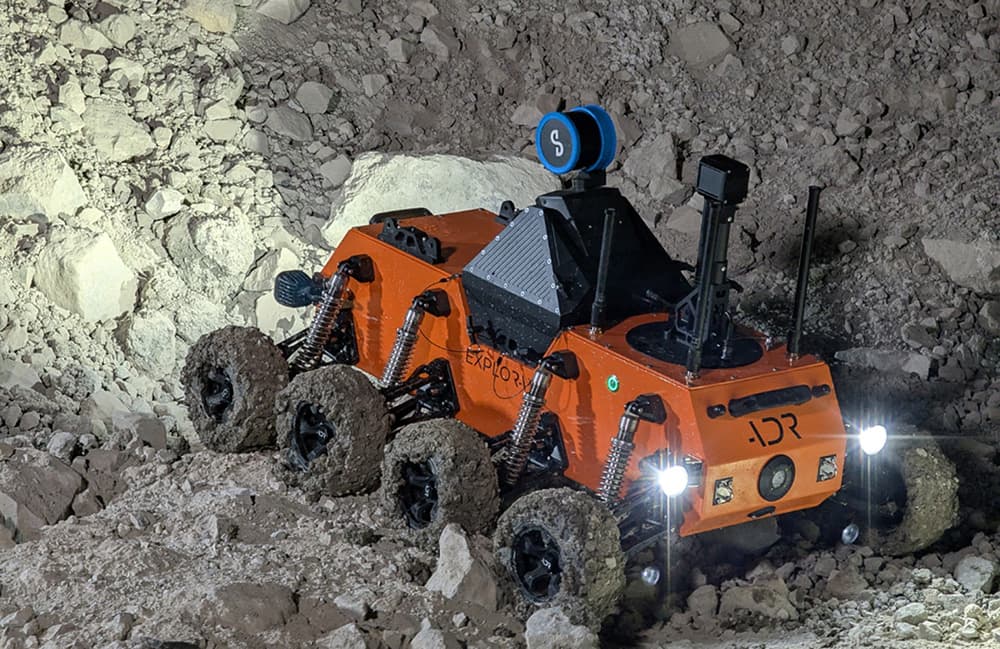
Australian Droid + Robot, known as ADR, has announced a strategic collaboration with Intel to deploy autonomous inspection robots powered by edge AI in one of the most hostile environments on Earth: deep underground mines. The partnership pairs ADR's ruggedized robotic platforms with Intel Xeon and Core Ultra processors, enabling real-time analysis of 3D LiDAR scans, thermal imaging, and gas levels in places where cloud connectivity is simply not an option.
The collaboration addresses a fundamental challenge in industrial robotics. Most AI-powered systems assume reliable network access for offloading computation to the cloud. Underground mines offer no such luxury. Hundreds of meters below the surface, surrounded by rock and earth, these robots must think for themselves using only the processors they carry.
Why Mining Is the Ultimate Edge Case
ADR chose mining as its primary market not because it is the easiest deployment environment but because it is the hardest. The company's reasoning is straightforward: if you can build a robot that survives a deep underground mine with extreme heat, pervasive dust, ankle-deep mud, and constant water intrusion, you can deploy it anywhere.
The conditions would destroy most commercial robotics hardware within hours. Temperatures routinely exceed safe working limits for humans. Dust particles are fine enough to infiltrate sealed electronics. Water is everywhere, from steady drips to sudden floods. And the geological environment is dynamic. Tunnel walls shift, floors collapse, and atmospheric composition can change without warning as pockets of methane or other gases are exposed.
The Human Cost of Inspection
Underground mine inspection is among the most dangerous jobs in industrial operations. Workers must regularly enter areas that may be structurally unstable, poorly ventilated, or contaminated with toxic gases. Replacing human inspectors with autonomous robots is not just an efficiency play; it is a safety imperative that can prevent injuries and save lives.
Intel's Role in Onboard Intelligence
By integrating Intel Xeon and Core Ultra processors directly onboard, ADR is enabling a level of computational capability that was previously impossible in mobile robotic platforms. These are not embedded microcontrollers running simple routines. They are server-grade processors capable of running complex AI inference workloads, 3D point cloud processing, and multi-sensor fusion in real time.
The partnership leverages Intel's hardware acceleration capabilities to handle heavy workloads efficiently. When operating at the edge, where every watt of power matters, the difference between generic processing and hardware-optimized acceleration becomes critical. ADR utilizes Intel's specific hardware-offloading features to maintain high performance without draining the battery, extending mission duration and reliability.
Scalable Compute Architecture
Intel's architecture provides what ADR describes as server-grade elasticity in a mobile form factor. The system can dynamically allocate compute resources based on the current task, whether that means processing dense 3D point clouds from LiDAR, running thermal anomaly detection algorithms, or performing gas composition analysis. This flexibility means the same robot can handle diverse inspection scenarios without hardware reconfiguration.
Practical Applications
The ADR-Intel robots perform several critical functions in underground environments. They generate high-resolution 3D maps of tunnel systems, identifying structural changes that might indicate instability. They monitor atmospheric conditions continuously, detecting dangerous gas concentrations before they reach hazardous levels. They perform thermal scanning to identify equipment hotspots that could indicate impending failure.
All of this data is processed onboard and stored locally. When the robot returns to an area with network connectivity, it can upload its findings to cloud-based analysis platforms. But the critical safety decisions happen at the edge, in real time, without waiting for a round trip to a data center thousands of miles away.
Beyond Mining
While mining is ADR's initial market, the technology has obvious applications in other GPS-denied, connectivity-limited environments. Tunnel infrastructure inspection, nuclear facility monitoring, disaster response in collapsed buildings, and underwater operations all share the fundamental challenge of autonomous operation without network support. ADR's partnership with Intel positions it to expand into these adjacent markets as the technology matures and proves itself in mining's unforgiving conditions.